Apart from Tesla, fast-charging infrastructure for electric vehicles has a downside. Some policy makers want to improve the experience for California EV owners.
It's no secret among electric-car drivers that the public DC fast-charging experience, Tesla aside, is nowhere near as reliable as it should be. Car Charging Station Manufacturers
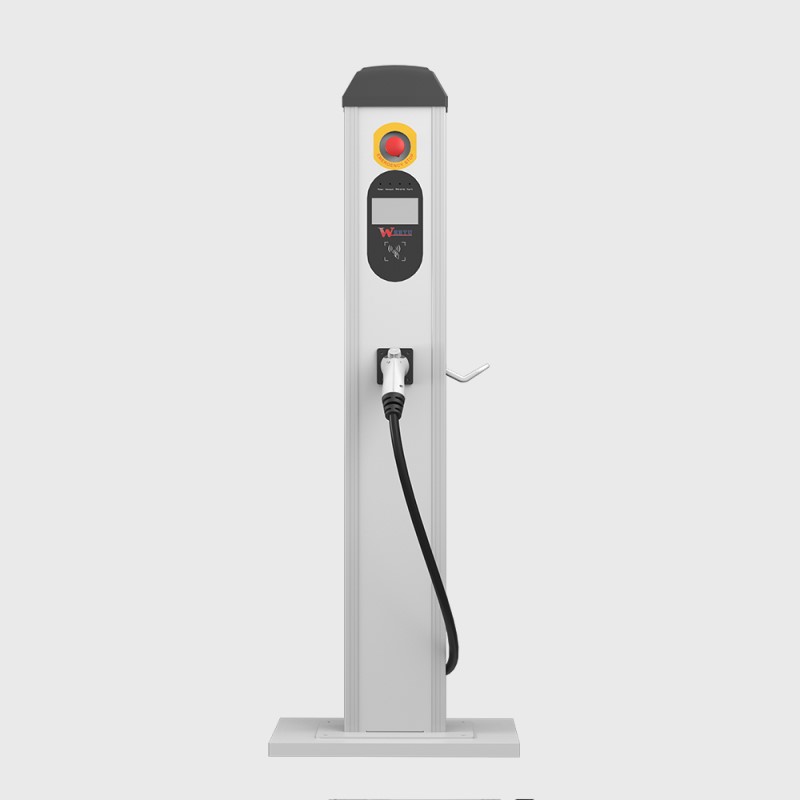
Now it appears California will take the initiative and set rules on how the reliability and availability of public EV charging stations is evaluated. The state's California Energy Commission plans to open a public feedback process it expects will lead to a definition of station "uptime" that does not "allow excessive exclusions" of the sort often used by charging networks to evade accountability.
Today, for example, an EV charging network may define a charger as "working" simply if it receives a response after pinging the station from a remote control center. But cellular connectivity with a charging station is far from a guarantee it can actually charge an EV, at the appropriate power level. Its payment validation software may be down; the credit-card reader may be jammed; station software may have bombed (showing only Windows code on the screen); the site may receive reduced power levels, and so forth.
None of these issues may be visible to the charging network, which thinks its station is operating fine because it pinged back. In many cases, user feedback—from angry tweets to comments and ratings on apps such as PlugShare or Chargeway—receives a response only 24 to 72 hours later, if at all, generally during standard weekday business hours.
Networks can also exclude from their uptime calculations any times when their cellular connection to a station is lost. Electrify America says it defaults to free charging if this happens, but not every network follows suit—meaning if the network can't get paid, the EV driver can't recharge, period.
California's plans for accountability were flagged in the below tweet by Loren McDonald, CEO of the EV and EV charging analysis and consulting firm EV Adoption. He highlighted a response by the Energy Commission to a letter it received from California State Assemblyman Phil Ting, who has proposed state legislation on charging reliability.
Part of a @CalEnergy response to a letter from Assemblyman @PhilTing on EV charger reliability. Interesting that the CEC is not just going to rely on the CPO's reporting to monitor uptime and charger availability. pic.twitter.com/MjO1xJUxUv
Broadly speaking, the Commission said it will no longer rely on the networks' self-reported claims about the uptime and availability of their charging stations. Instead, it will survey multiple data sources and qualitative feedback from the public—which could include, say, reports of dead charging stations on apps—to assess the reliability and availability of chargers.
One further note: California plans to measure uptime at the individual charging station (cable or pedestal) level, unlike draft standards being developed by the National Electric Vehicle Infrastructure (NEVI) program that may look only at the overall site. If one charging station functions at a given location, that would be considered a 100 percent score. That's what charging networks prefer, because it's easier. But ask yourself this: If you arrived at a gas station that had eight separate hoses and only one provided gasoline, would you give it a 100 percent score?
The exception to often unreliable public charging sites is Tesla. The company operates its own Supercharger network, open only to Tesla drivers, which was designed from the start as a seamless part of the EVs' navigation. The company designed and installs its own charging stations, with software tightly integrated into the Tesla ownership experience.
For other brands of EVs, long-distance travel can be more fraught. Multiple competing EV charging networks have spent five years in a furious arms race to get as many stations into the ground as they can. There are major incentives to do so—primarily increased footprint they hope will boost their valuations as the industry ancticipates future consolidation. There are virtually no incentives, however, to keep the damn things working once they've been installed.
To be fair, non-Tesla networks must cope with tougher integration than Tesla does. Historically, they have bought off-the-shelf DC fast-charging hardware, often using multiple vendors within a network. Their software must accommodate dozens of different EV models from automakers who may update the cars' operating software without re-testing at every station operated by every network. They must offer multiple payment options, from credit cards to RFID fobs to phone apps, with membership plans and variable prices from state to state. None of that is easy.
The list of reasons a charging station may not work could fill a book, but it's quickly getting to the point where EV users no longer care what went wrong. Take, for example, the recent bitter cold snap over much of the United States. Some customers complained that a new station design, launched by a large EV charging network, had failed to work in extreme cold. Gasoline stations, by and large, worked just fine during the same weather.
While glitches may have been tolerable in the early days of EVs, public DC fast-charging has existed for around five years now—but experienced EV drivers must still check multiple apps to ensure critical fast-charging sites along a planned route are actually functioning.
California's efforts to get more data on public-charging reliability, and its efforts to institute some kind of accountability among networks, are long overdue. Let us hope other states follow its lead.
Ford to Make Its Own Cost-Saving LFP EV Batteries
Future EVs: Every Electric Vehicle Coming Soon
Nissan: EVs with Solid-State Batteries in 2028
U.S.-Made EVs Could Get Massively Cheaper
5 Chinese Carmakers Going Big on Electric Vehicles
The 2024 GMC Hummer EV SUV Is in Production
Tesla EVs Getting Written Off, Too Pricey to Fix
Future Is Looking More Lucid for the EV Startup
The Adorable Suzuki Jimny Is Going Electric
BMW Gets Ready to Test Solid-State Batteries
We Now Have a 19.2-kW Level 2 Hookup at Our Office
A Part of Hearst Digital Media
We may earn a commission for purchases made through our links.
Electric Car Charger Suppliers ©Hearst Autos, Inc. All Rights Reserved.